CQC-regulated clinics & online consultations


Posted on January 16, 2024 by Sally-Anne Turner
GLP-1 is one of the most talked-about terms in weight management. You'll see it in news headlines, on social media and in conversations with friends, but it isn't always clear what it actually means. Is GLP-1 a hormone, a medicine, or both? And what has it got to do with appetite and weight?
In this guide, we explain what GLP-1 stands for, what the hormone does in your body, how GLP-1 medicines work, who they may be prescribed for, and what to know about side effects and buying safely in the UK. We'll also explain how GLP-1 medicines differ from other prescription weight loss treatments, and how Bodyline's clinical team supports patients throughout a medical weight loss programme.
GLP-1 medicines are prescription-only. At Bodyline, any prescription treatment is only considered after a consultation with a qualified prescriber, who will decide what is suitable for you.
GLP-1 stands for glucagon-like peptide-1. Breaking that down:
When people talk about "GLP-1s", they usually mean GLP-1 medicines, also called GLP-1 receptor agonists. Strictly speaking, though, GLP-1 is a hormone your body makes naturally, and the medicines are designed to copy its effects.
GLP-1 is produced by specialised cells in the lining of your gut, mainly in the small intestine. It's released shortly after you eat, particularly in response to carbohydrates and fats, and forms part of a network of signals that help your body manage blood sugar, digestion and appetite.
GLP-1 belongs to a group of hormones called incretins. Incretins help your body respond to a meal by prompting the release of insulin when blood sugar rises. This is one of the reasons GLP-1 has been studied so closely in diabetes research.
Natural GLP-1 doesn't last long. It's broken down by an enzyme in the body within a few minutes of being released, so its effects are short-lived. This detail matters, because it explains why GLP-1 medicines were designed to last much longer than the natural hormone.
According to published research, GLP-1's main roles include:
Together, these effects help your body handle a meal smoothly, keeping blood sugar steady and signalling when you've had enough to eat.
Yes. GLP-1 is a natural gut hormone. It acts as a messenger, carrying signals from your gut to other parts of the body, including the pancreas and the brain.
No. GLP-1 and insulin are different hormones. Insulin is made by the pancreas and helps move glucose from your blood into your cells. GLP-1 is made in the gut and prompts the pancreas to release insulin when blood sugar is raised. In other words, GLP-1 helps control when insulin is released, but it isn't insulin itself.
Appetite is controlled by a constant conversation between your gut and your brain. After you eat, hormones such as GLP-1 tell the brain that food has arrived and that you can start to feel full. Other hormones, such as ghrelin, do the opposite and signal hunger when your stomach is empty.
GLP-1 affects appetite in two main ways. In the brain, it acts on areas involved in hunger and fullness, helping you feel satisfied. In the stomach, it slows digestion, so food stays there for longer and that feeling of fullness lasts.
Appetite is complex, though, and many things influence it, including sleep, stress, habits, emotions and some medicines. GLP-1 is one part of a much bigger picture, which is why a medical weight loss programme looks at your lifestyle and health as well as any treatment.
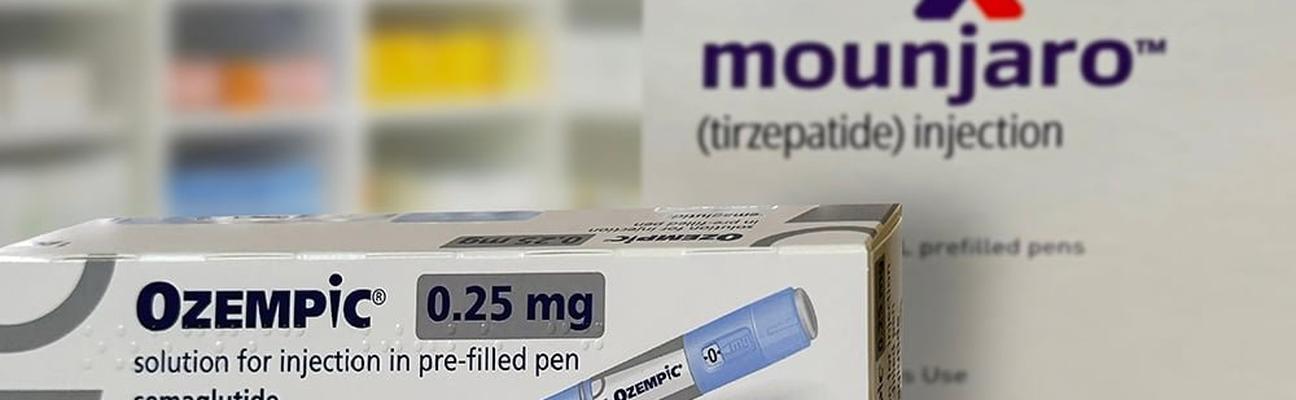
GLP-1 medicines, also called GLP-1 receptor agonists or GLP-1 analogues, are prescription medicines designed to copy the effects of natural GLP-1. They attach to the same receptors in the body as the natural hormone and activate them.
The key difference is how long they last. Natural GLP-1 is broken down within minutes, but GLP-1 medicines are designed to stay active in the body for much longer, from around a day to a week, depending on the medicine.
GLP-1 medicines were first developed in the 2000s to treat type 2 diabetes, because of their effect on blood sugar. During research, it became clear that they also reduce appetite, and some GLP-1 medicines are now licensed in the UK for weight management in adults who meet certain criteria. Some newer medicines act on GLP-1 alongside other gut hormones.
In the UK, medicines are licensed by the Medicines and Healthcare products Regulatory Agency (MHRA). GLP-1 medicines are prescription-only, which means they can only be prescribed by a qualified prescriber after a consultation.
GLP-1 medicines work in a similar way to the natural hormone, but for longer. They can:
Many people find they feel satisfied with smaller portions. How someone responds varies from person to person, and these medicines are designed to be used alongside changes to eating habits and activity, not instead of them.
Most GLP-1 medicines used for weight management are given as an injection under the skin, using a pre-filled pen. Depending on the medicine, this is usually once a day or once a week. Some GLP-1 medicines are also available as tablets. Your prescriber can explain which options are suitable for you and how they're used.
No. You may see products advertised online as "GLP-1 patches", "GLP-1 drops", "GLP-1 boosters" or "GLP-1 supplements". Genuine GLP-1 medicines are prescription-only and can't legally be sold as supplements, patches or drops. Products marketed this way are not prescription GLP-1 medicines, and claims made about them may not be supported by evidence. If you're unsure about a product, speak to a pharmacist or a regulated healthcare provider.
Research has shown that GLP-1 medicines can reduce appetite and help with weight management when used alongside changes to diet and activity. However, results vary from person to person, and they aren't suitable for everyone. Your prescriber will explain what to expect and review your progress regularly.
Some people notice a change in their appetite soon after starting treatment, while for others it's more gradual. GLP-1 medicines are usually started at a low dose, which may be increased over time to help your body adjust. Weight changes happen gradually, alongside the eating and activity changes in your plan.
It depends on the medicine. Daily medicines leave the body more quickly, while weekly medicines are designed to last longer and can stay in your system for several weeks after your last dose. Your prescriber will explain what this means for you, including if you're planning a pregnancy or surgery.
When treatment stops, appetite can gradually return to how it was before. This is why the habits you build during your programme matter so much. Your clinical team will talk with you about the next stage, so you have a plan for maintaining your progress.
Some GLP-1 medicines are available on the NHS for people who meet specific criteria, usually through specialist weight management services, and access can be limited. Many people choose to access a supported weight loss programme privately through a regulated clinic.
GLP-1 medicines for weight management are generally considered for adults with a BMI of 30 or above, or 27 or above with a weight-related health condition such as type 2 diabetes, high blood pressure, high cholesterol or sleep apnoea. The exact criteria vary between medicines.
BMI isn't the only factor. Your prescriber will look at your medical history, current medicines and overall health before deciding whether any treatment is suitable for you. GLP-1 medicines aren't suitable for everyone, including during pregnancy or breastfeeding, and some medical conditions may mean they aren't right for you.
If you're planning a pregnancy or use contraception, tell your prescriber. They'll explain what you need to know, as some GLP-1 medicines can affect how well oral contraceptives work.
Like all medicines, GLP-1 medicines can cause side effects, although not everyone gets them. Because they act on the digestive system, the more common side effects include:
These are often most noticeable when treatment starts or the dose is increased, and many people find they ease over time. Eating smaller meals, eating slowly, stopping when you feel full and drinking plenty of water can help. Your clinical team will talk you through what to expect and review how you're getting on at each appointment.
Less commonly, GLP-1 medicines can cause more serious problems, such as inflammation of the pancreas (pancreatitis) or gallbladder problems. Seek urgent medical help if you have severe, persistent stomach pain, which may spread to your back.
Demand for GLP-1 medicines has led to a rise in fake and unregulated products. The MHRA has warned about unsafe fake weight loss pens sold online and through social media, some of which have caused serious harm.
To stay safe:
A regulated clinic will review your health before prescribing, explain how to use your treatment and support you throughout. That ongoing support is just as important as the medicine itself.
GLP-1 medicines aren't the only type of prescription weight loss treatment. Appetite suppressants such as phentermine work in a different way:
Neither type of treatment is right for everyone. Which, if any, is suitable depends on your medical history, current medicines and overall health, and that's a decision for your prescriber at your consultation. You can find out more in our guide to phentermine tablets in the UK, or read about how phentermine works.
Any prescription treatment works best as part of a wider weight management plan. At Bodyline, every programme includes support with nutrition, activity and the habits that help you make lasting changes.
When your appetite is lower, it's important that the food you do eat counts. Your clinical team may suggest:
Regular activity supports your health in many ways beyond the scales, including better mood, better sleep and stronger joints. Walking is a great place to start, and adding some strength-based activity, such as resistance bands or bodyweight exercises, can help you keep your muscle strength as you lose weight. Your clinical team can help you build up at a pace that suits you.
The habits you build during your programme are what help you maintain your progress in the long term. That includes planning meals, recognising emotional eating triggers, getting enough sleep and having a plan for busy or difficult periods. As you get closer to your goal, your clinical team will talk with you about the next stage.
At Bodyline, any prescription treatment is part of a supported weight loss programme. We've been a trusted UK slimming clinic for nearly two decades and have supported over 100,000 patients. Here's how it works:
Our specialised supported weight loss programmes are designed for patients who may need extra clinical support, including adults aged 70 and over.
You can have your consultations by video call anywhere in the UK, or at our seven clinics in Birkenhead, Liverpool, Manchester, St Helens, Stockport, Stoke-on-Trent and Warrington. Find your nearest Bodyline clinic, or find out more about our online consultation clinic.
If you'd like to find out whether a medical weight loss programme is right for you, complete the form below or call us on 0800 995 6036. Our patient team will talk through your medical history and book your consultation, either online or at one of our clinics. There's no obligation to start a programme after your consultation.
BMI calculator
Enter your height and weight to work out your Body Mass Index in seconds.
Your BMI
Find out where you sit and what your options are
Your BMI
Our CQC-regulated clinical team will confirm your eligibility at consultation, in clinic or by video.
CQC regulated 4.8 on Trustpilot
If you'd like advice on your health and wellbeing, our team can talk you through the services we offer.
Explore our servicesWe'd recommend speaking to your GP, who can check everything is OK and offer the right support.
BMI ranges work differently for under 18s, because they take age and sex into account.
Child and teen BMI calculatorPlease check your height and weight.
Contact us today
Find out more about how we can treat and support you to improve your health and wellbeing.

No-obligation advice from our CQC-regulated team, in clinic or by video.