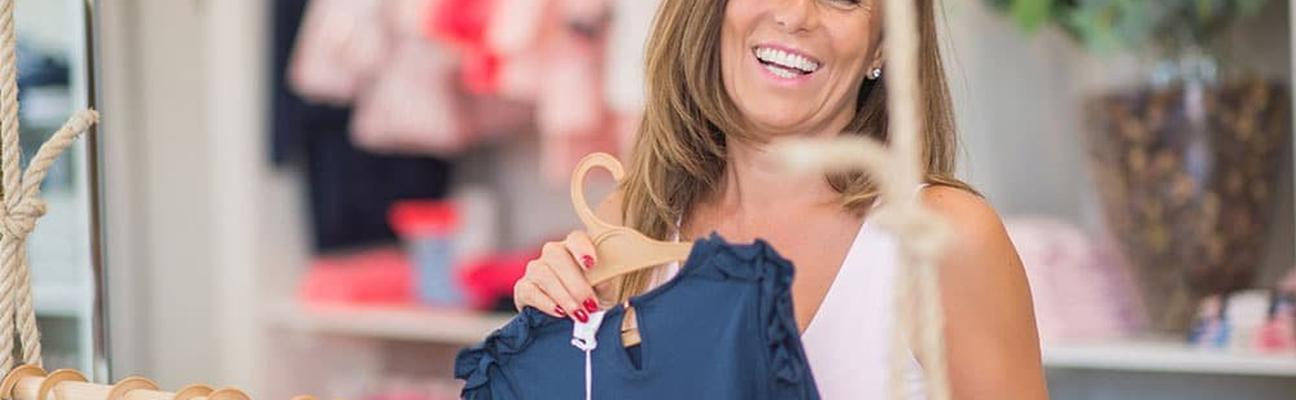
How to Dress to Flatter Your Shape During the Menopause
Posted on October 10, 2023 by Sally-Anne Turner
Due to changes in hormone levels, the menopause brings about various changes in a woman's body, including shifts in weight distribution and changes in body shape. This change comes because during the menopause the body gradually produces less and less 'oestrogen'. This hormone regulates women's metabolisms, so without it, menopausal women are more susceptible to gaining weight where they may not have been before. The decline in oestrogen doesn't happen overnight – it's a gradual process that can begin during perimenopause, sometimes years before your periods stop completely. This hormonal shift affects not just your weight but also where your body stores fat, how efficiently you burn calories, and even how your muscles respond to exercise.
Additionally, the menopause reduces the number of 'high-density lipoproteins' in the body, the proteins responsible for transporting cholesterol throughout the body. When this decreases, the fat and energy we gain through eating are not properly distributed and build up into weight gain, particularly around the stomach area. This visceral fat accumulation around the abdomen is one of the most common complaints women have during menopause. Unlike the subcutaneous fat that sits just beneath the skin, visceral fat wraps around your internal organs and can be particularly stubborn to shift. Many women who have maintained a relatively consistent weight throughout their adult lives suddenly find themselves developing what's often called a "menopause belly" or "middle-age spread" – even when their eating habits and activity levels haven't changed significantly.
Bodily changes like unexpected weight gain, along with other debilitating menopause symptoms, can significantly impact a woman's confidence, especially when clothes no longer fit, and styles no longer suit. The emotional impact of these physical changes shouldn't be underestimated. Many women report feeling like they've lost control of their bodies, experiencing frustration when favourite outfits no longer fit properly, or avoiding social situations because they feel self-conscious about their changing shape. The psychological toll can be just as challenging as the physical symptoms, affecting everything from your professional confidence to your intimate relationships. Understanding that these changes are a normal part of the menopausal transition – and that there are practical strategies to help you look and feel your best – can make an enormous difference to your overall wellbeing during this time.
Dressing in a way that flatters your shape during this transitional period can help boost your confidence and make you feel comfortable and empowered. Here at Bodyline, we want to provide you with essential tips and advice on how to dress to flatter your shape during the menopause. With over 18 years of experience supporting women through their menopause journey, we understand the challenges you're facing and want to offer practical guidance that goes beyond just medical treatment. Looking good and feeling comfortable in your clothes is an important part of maintaining your confidence and quality of life during menopause. The right clothing choices can help you feel more like yourself, even when your body is going through significant changes.
Understanding Your Body Shape
Before diving into specific dressing tips, it's important to understand your body shape. The most common body shapes include:
- Apple: This shape is characterised by the body holding weight around the midsection and a less defined waistline. This is a common feature of menopause weight gain. Women with apple shapes typically have slimmer legs and arms compared to their torso and may notice that weight gain during menopause makes this characteristic even more pronounced. The hormonal changes of menopause tend to direct fat storage to the abdominal area, which means even women who previously had different body shapes may find themselves developing more apple-like proportions during this time. If you're noticing that your waistbands are getting tighter whilst your arms and legs remain relatively unchanged, you're likely experiencing the classic apple-shape weight distribution that's so common during menopause.
- Pear: You are pear-shaped if you hold fat in the hips, thighs, and buttocks, with a smaller upper body. Interestingly, women with pear shapes may actually find that menopause changes their body proportions somewhat, as the hormonal shift encourages more weight gain around the middle rather than the lower body. However, if you've always been pear-shaped, you'll likely retain some of these characteristics even as your body changes. Pear-shaped women often have well-defined waists and smaller busts, with the majority of their curves concentrated in their lower half. During menopause, you might notice that whilst you still carry weight in your hips and thighs, you're also developing more fullness around your waist than you had before.
- Hourglass: This shape is characterised by a well-defined waistline and balanced proportions between the upper and lower body. Holding weight in the thighs and hips as well as the upper body and arms gives you an hourglass figure. Women with hourglass figures are often considered to have the most balanced body proportions, with bust and hip measurements that are relatively similar and a noticeably smaller waist. During menopause, hourglass-shaped women may find that their waist definition becomes less pronounced as weight accumulates around the middle. However, the overall balanced proportions between the upper and lower body typically remain, even if the waist-to-hip ratio changes somewhat. Many women with hourglass figures find that they need to adapt their dressing strategies during menopause to maintain the appearance of a defined waist.
- Rectangle: This shape is characterised by a straighter silhouette with minimal waist definition. Rectangle-shaped women typically have bust, waist, and hip measurements that are quite similar to each other, creating an athletic or straight up-and-down appearance. During menopause, rectangle shapes may become more pronounced as any existing waist definition diminishes with hormonal changes. However, rectangle-shaped women often find that they can carry menopausal weight gain relatively evenly across their frame, which can actually work to their advantage when it comes to dressing. The key for rectangle shapes is creating the illusion of curves and definition where the body's natural lines are straighter.
Identifying your body shape will help you choose clothing that accentuates your best features and creates a balanced and flattering silhouette. It's worth taking some time to really assess your current body shape, as it may have changed from what it was in your pre-menopausal years. Stand in front of a full-length mirror in well-fitting underwear and take an honest look at where you're carrying weight, where your natural waistline sits, and how your proportions have shifted. Take measurements of your bust, waist, and hips – this objective data can be helpful when shopping for clothes and understanding which styles will work best for your current shape. Remember that your body shape isn't a judgement of your worth or attractiveness; it's simply a practical tool to help you make clothing choices that make you feel confident and comfortable. Many women find that once they accept and work with their current body shape rather than fighting against it, getting dressed becomes much less stressful and more enjoyable.
Contact Bodyline today to find out more about our hormone replacement therapy treatments
What Are the Symptoms of Menopause?
Understanding the full range of menopause symptoms can help you make better clothing choices that address not just your changing shape but also the physical sensations you're experiencing. Hot flashes and night sweats are among the most common symptoms, affecting up to 75% of menopausal women. These sudden feelings of intense heat can strike at any time, leaving you flushed, sweating, and desperately trying to cool down. When it comes to dressing, this means choosing fabrics that breathe well and can be easily layered so you can adjust your clothing as your body temperature fluctuates throughout the day.
Beyond hot flashes, many women experience changes in their skin during menopause. Declining oestrogen levels can lead to drier, thinner skin that's more sensitive to irritation from certain fabrics. You might find that materials you once wore comfortably now feel scratchy or uncomfortable against your skin. Wool, for instance, might suddenly feel unbearably itchy, whilst synthetic fabrics might make you feel hot and sweaty even when you're not having a hot flash. Paying attention to how different fabrics feel against your skin can help you build a wardrobe that's not just flattering but genuinely comfortable to wear all day long.
Weight gain and changes in body composition are symptoms that directly impact how you dress. As we've discussed, the hormonal changes of menopause tend to redistribute fat to the abdominal area, but you might also notice loss of muscle mass, particularly in your arms and legs. This can change how clothes hang on your body. Sleeves that once skimmed your arms might now feel loose, whilst waistbands that used to sit comfortably now dig in uncomfortably. Breast changes are also common during menopause – some women find their breasts become larger and heavier, whilst others experience a loss of volume and firmness. These changes can affect how tops and dresses fit across the chest and may require you to reassess your bra size and the styles of tops that work best for you.
Joint pain and stiffness affect many menopausal women, and whilst this might not seem directly related to clothing choices, it absolutely is. If you're experiencing stiff, painful joints in your hands, you'll want to avoid clothing with fiddly buttons, complicated fastenings, or tight sleeves that are difficult to pull on. Similarly, if your feet are affected, you'll need to reconsider your footwear choices, perhaps opting for shoes with more support and cushioning rather than the high heels you might have worn previously. Comfort becomes increasingly important when you're dealing with physical discomfort, and your clothing should support your wellbeing rather than adding to your challenges.
Mood changes, anxiety, and loss of confidence are psychological symptoms of menopause that significantly impact how women feel about getting dressed. Many women report that they simply don't feel like themselves anymore, and this disconnection from their sense of identity can make choosing clothes feel overwhelming. If you're experiencing these symptoms, it's worth remembering that finding clothes that make you feel good isn't superficial or vain – it's an important part of self-care and maintaining your mental wellbeing during a challenging time. At Bodyline's menopause clinics, we understand that the physical and emotional symptoms of menopause are interconnected, and we take a holistic approach to supporting women through this transition.
Dressing Tips for Flattering Your Shape
Apple Shape
- Focus on V-neck or scoop-neck tops to draw attention to your upper body. These necklines create vertical lines that elongate your torso and draw the eye upward toward your face and away from your midsection. V-necks are particularly flattering because they create the illusion of length and can make your neck appear longer and more elegant. Avoid high, tight necklines like crew necks or polo necks, which can make your upper body appear wider and draw attention to any fullness around your middle. Wrap tops with V-necklines are especially effective for apple shapes, as they create a diagonal line across the body that's universally flattering and can be adjusted to show as much or as little décolletage as you're comfortable with.
- Choose tops that flow away from the midsection to create a more balanced look. Empire-line tops and dresses, which are fitted under the bust and then flow loosely over the stomach, are ideal for apple shapes experiencing menopausal weight gain. Tunics, peplum tops, and styles with gentle A-line silhouettes all work well to skim over the midsection without clinging. The key is to avoid anything too tight or too loose – clothing that's too tight will highlight the areas you're self-conscious about, whilst clothing that's too baggy can actually make you look larger than you are. Look for tops with some structure that drape nicely without being clingy. Fabrics with a bit of weight to them, like good-quality jersey or ponte, tend to skim rather than cling.
- Opt for bottoms with a bit of stretch and a higher rise to smooth and support the midsection. High-waisted trousers, jeans, and skirts can be incredibly flattering for apple shapes, as they provide gentle support around the tummy area and create a smooth line under your clothing. Look for styles with a contoured waistband that sits comfortably at your natural waist without digging in. Avoid low-rise styles that sit on your hips, as these can create an unflattering muffin-top effect when you sit down. Straight-leg or slightly bootcut trousers work well for apple shapes, as they balance out the proportions of your upper and lower body. Dark-coloured bottoms in black, navy, or charcoal grey are universally flattering and create a sleek, elongating effect.
- Choose A-line or fit-and-flare dresses that cinch at the waist and flow away from the midsection. These dress styles are perfect for apple shapes because they define the smallest part of your torso (typically just under the bust or at the natural waist) and then flow gracefully over the stomach and hips. Wrap dresses are particularly effective, as they create a flattering V-neckline, define the waist, and the diagonal wrap creates visual interest that draws the eye across the body rather than focusing on any one area. When choosing dresses, look for styles with some structure in the bodice – this provides support and creates a smooth line. Avoid dresses that are shapeless or boxy, as these will make you appear larger than you are. Similarly, avoid bodycon or very fitted styles that cling to every curve, as these won't be comfortable or flattering for most apple shapes dealing with menopausal weight changes.
Pear Shape
- Emphasize your upper body with tops that have interesting details, such as embellishments or patterns. As a pear shape, your aim is to draw attention upward and create balance between your smaller upper body and fuller lower body. Tops with details around the neckline, shoulders, or bust area work beautifully for this. Consider styles with ruffles, embroidery, beading, or interesting necklines that add visual interest to your upper half. Boat necks, bardot styles, and off-the-shoulder tops are particularly flattering for pear shapes, as they broaden the shoulder line and create better proportion with your hips. Bright colours, bold patterns, and lighter shades all work well for tops, as they draw the eye upward. Statement sleeves – whether puffed, bell-shaped, or detailed with ruffles – can add volume to your upper body and create a more balanced silhouette.
- Opt for bottoms in darker colors or with minimal details to draw attention away from the hips and thighs. Whilst you're adding interest to your upper body, you want to keep your lower half relatively simple and streamlined. Dark colours like black, navy, charcoal, and deep plum are slimming and elegant for trousers, jeans, and skirts. Avoid bottoms with lots of pockets, embellishments, or details around the hip and thigh area, as these add visual bulk. Similarly, be cautious with bold patterns, horizontal stripes, or light colours on your lower half, as these can make this area appear larger. Solid colours in darker shades create the most flattering line. When it comes to fit, look for trousers and jeans that sit smoothly over your hips without gaping at the waist or pulling across the thighs.
- Choose A-line skirts or dresses that flare out from the waist to create balance. A-line skirts are universally flattering for pear shapes because they skim over the hips and thighs without clinging, creating a graceful, feminine silhouette. The gentle flare of an A-line skirt balances out fuller hips and creates an elegant line from waist to hem. Knee-length or just-below-the-knee A-line skirts are particularly flattering, as this length typically hits at the slimmest part of your leg. When choosing dresses, look for styles that are fitted through the bodice and then flare gently from the waist. Fit-and-flare dresses are ideal for pear shapes, as they highlight your narrower waist whilst skimming over your hips and thighs. Wrap dresses also work well, as they can be adjusted to fit your proportions perfectly.
- Experiment with wide-leg or bootcut pants to create a more proportionate look. Whilst skinny jeans might seem like a good choice for showing off slimmer legs, they can actually make pear-shaped women appear more bottom-heavy by emphasizing the contrast between narrow ankles and fuller hips and thighs. Wide-leg trousers or bootcut jeans create a more balanced line from hip to hem, and the slight flare at the bottom balances out fuller hips. Palazzo pants, culottes, and wide-leg trousers in flowing fabrics can be incredibly elegant and comfortable, particularly during the warmer months when hot flashes might make you reluctant to wear close-fitting clothing. The key is to ensure that wide-leg styles are fitted properly through the hip and thigh – they should sit smoothly over your curves without being tight, then flow from the knee down. If wide-leg styles feel too dramatic for you, bootcut or straight-leg trousers offer a more subtle way to balance your proportions.
Hourglass Shape
- Emphasize your waistline with belted tops or dresses to highlight your curves. Even if your waist definition has diminished somewhat during menopause, you can create the appearance of a defined waist with strategic use of belts and fitted styles. Wrap dresses and tops are ideal for hourglass figures, as they naturally create a defined waist. Adding a belt to dresses, tunics, or cardigans instantly creates shape and prevents you from looking shapeless or boxy. Choose belts that sit at your natural waist (typically the narrowest part of your torso, usually just above your belly button) rather than on your hips. Wider belts can be particularly effective for creating a smooth, defined line, whilst thinner belts work well for more subtle definition. Don't be afraid to experiment with belts in different colours and textures – a statement belt can transform a simple dress into something special.
- Opt for fitted tops that show off your balanced proportions. Hourglass figures look best in clothing that follows the lines of the body rather than hiding them. This doesn't mean wearing tight or revealing clothing – it simply means choosing pieces that acknowledge your curves rather than drowning them in fabric. Fitted knit tops, structured blouses, and tailored shirts all work well for hourglass shapes. Look for fabrics with some stretch that will move with your body without clinging uncomfortably. Avoid boxy, oversized styles that hide your waist, as these will make you appear larger than you are. Similarly, be cautious with empire-line styles that are loose from the bust down, as these can make hourglass figures look pregnant rather than simply hiding the waist.
- Choose bottoms that hug your curves and accentuate your waistline, such as pencil skirts or high-waisted jeans. Pencil skirts are particularly flattering for hourglass figures, as they follow the line of your hips and thighs, creating an elegant, feminine silhouette. High-waisted styles are ideal because they sit at your natural waist, the narrowest part of your torso, creating beautiful proportions. High-waisted jeans or trousers paired with a tucked-in or cropped top highlight your waist and show off your balanced figure. When choosing trousers, look for styles that are fitted through the hip and thigh – bootcut or straight-leg styles work well, as they balance out your curves without adding bulk. Avoid very low-rise styles that sit on your hips, as these can create an unflattering gap between the waistband and your top, and they don't take advantage of your naturally defined waist.
- Avoid oversized or boxy silhouettes that may hide your natural curves. This is perhaps the most important tip for hourglass figures dealing with menopausal body changes. When you're feeling self-conscious about weight gain, it's tempting to hide your body in loose, baggy clothing. However, for hourglass shapes, this strategy backfires. Oversized, shapeless clothing makes you appear larger than you are because it adds visual bulk without showing any of your natural shape. Instead of hiding your body, work with your proportions by choosing clothing that skims your curves without being tight. Structured fabrics and tailored styles are your friends – they create a smooth, polished line that flatters your figure without clinging. If you're concerned about your midsection, choose tops and dresses that are fitted through the bust and shoulders, then flow gently over your stomach, maintaining the definition of your waist without being tight around your middle.
Rectangle Shape
- Create the illusion of curves by adding volume to your upper and lower body. Rectangle shapes benefit from clothing that creates the appearance of a more defined waist and adds curves to the bust and hips. This doesn't mean you need to wear padded bras or hip-enhancing undergarments (though you certainly can if you wish) – it simply means choosing clothing styles that create visual interest and dimension at your bust and hips, which makes your waist appear smaller by comparison. Layering is an excellent technique for rectangle shapes, as it adds dimension to your silhouette. Try wearing a structured blazer over a fitted top, or layer a long cardigan over a dress with a belt at the waist.
- Choose tops with ruffles, pleats, or embellishments to add dimension. Details around the bust area create the illusion of a fuller chest, which in turn makes your waist appear more defined. Ruffled blouses, tops with pleated fronts, or styles with embellishments around the neckline and bust all work well for rectangle shapes. Peplum tops are particularly effective, as they add volume at the hips whilst the peplum detail creates the illusion of a defined waist. Wrap tops and dresses also work beautifully for rectangle shapes, as the diagonal wrap creates curves and the tie at the waist defines this area. Don't be afraid to experiment with different textures and layers – a silk camisole under a textured cardigan, for instance, creates visual interest and dimension.
- Opt for skirts or dresses with volume, such as A-line or circle skirts. Skirts that add fullness to your hips create the illusion of curves and make your waist appear smaller by comparison. A-line skirts, circle skirts, and skirts with pleats or gathering all work well for rectangle shapes. These styles add volume to your lower body, creating a more balanced, curvy silhouette. When choosing dresses, look for styles that add interest and volume at both the top and bottom whilst defining the waist. Fit-and-flare dresses are ideal for rectangle shapes, as they're fitted through the bodice (creating shape at the bust), nipped in at the waist (creating definition), and then flare out over the hips (adding curves). Tiered or ruffled dresses also work well, as the layers add dimension and movement.
- Experiment with belts and peplum tops to create the illusion of a defined waistline. Belts are a rectangle shape's best friend when it comes to creating the appearance of a waist. Adding a belt to dresses, tunics, cardigans, or even over blazers instantly creates shape and definition. Choose belts in contrasting colours to really emphasize your waist, or match your belt to your outfit for a more subtle effect. Peplum tops and dresses are particularly flattering for rectangle shapes because the peplum detail naturally draws the eye to the waist area, creating the illusion of definition even if your natural waist isn't particularly narrow. The flare of the peplum also adds volume at the hips, creating curves. When wearing peplum styles, ensure the peplum hits at your natural waist for the most flattering effect.
Dressing During the Menopause
Regardless of your body shape, there are some additional tips that can help you dress your best during the menopause:
- Choose fabrics that are breathable and lightweight to help regulate body temperature during hot flashes. Natural fibres like cotton, linen, and bamboo are excellent choices because they allow air to circulate and wick moisture away from your skin. Cotton is affordable, versatile, and comes in many different weights and weaves, making it suitable for everything from casual t-shirts to more formal blouses and dresses. Linen is particularly good for hot weather, as it's extremely breathable and has a relaxed, elegant look. Bamboo fabric is increasingly popular for menopausal women because it's naturally moisture-wicking, antibacterial, and incredibly soft against sensitive skin. Avoid synthetic fabrics like polyester, nylon, and acrylic when possible, as these trap heat and moisture against your skin, making hot flashes more uncomfortable. If you do wear synthetic fabrics, look for modern technical fabrics designed for activewear, which are engineered to wick moisture and allow heat to escape.
- Layer your clothing to easily adjust to fluctuating body temperatures. Layering is perhaps the single most important dressing strategy for menopausal women dealing with hot flashes and temperature regulation issues. The principle is simple: wear multiple thin layers that can be easily removed and replaced as your body temperature changes throughout the day. Start with a lightweight base layer (like a cotton camisole or t-shirt), add a middle layer (such as a cardigan, blazer, or light jumper), and finish with an outer layer if needed (like a jacket or coat). This approach means that when a hot flash strikes, you can quickly remove a layer to cool down, then add it back once the hot flash has passed. Choose cardigans and jackets with easy fastenings – zips or open-front styles work better than buttons when you're trying to cool down quickly. Keep a lightweight cardigan or shawl at your desk, in your car, and in your bag so you're always prepared for temperature fluctuations.
- Invest in well-fitting undergarments to provide support and enhance your overall silhouette. The right underwear can make an enormous difference to how your clothes fit and how confident you feel. Many women continue wearing the same bra size they've worn for years, even though their body has changed significantly. It's worth getting professionally fitted for a bra at least once a year, as your size may change during menopause due to weight fluctuations, changes in breast tissue, or shifts in where you carry weight on your torso. A well-fitting bra should provide support without digging in, with the band sitting level around your body and the cups smoothly encasing your breasts without spillage or gaping. For many menopausal women, seamless underwear and bras are more comfortable than styles with lots of lace or decoration, which can irritate sensitive skin. Consider investing in shapewear if you want extra smoothing and support under fitted clothing – modern shapewear is much more comfortable than the restrictive girdles of the past, with breathable fabrics and designs that smooth without squeezing uncomfortably.
- Consider consulting with a professional stylist who can provide personalized advice based on your body shape and style preferences. If you're feeling overwhelmed by your changing body and struggling to know what to wear, a professional stylist can be worth their weight in gold. Personal stylists or image consultants can assess your current body shape, colouring, and lifestyle needs, then provide specific recommendations for styles, colours, and brands that will work for you. Many stylists offer wardrobe audits, where they come to your home and go through your existing clothes with you, helping you identify what works, what doesn't, and what gaps you need to fill. They can also accompany you shopping, either in person or virtually, helping you choose pieces that flatter your shape and fit your budget. Whilst this might seem like an extravagance, many women find that investing in a few hours with a professional stylist saves them money in the long run by preventing expensive clothing mistakes and helping them build a wardrobe of pieces they actually wear and feel good in.
Dressing to flatter your shape during the menopause is all about embracing your unique body and accentuating your best features. By understanding your body shape and following the dressing tips provided, you can feel confident, comfortable, and stylish during this transformative period. Remember, the key to dressing well is to wear what makes you feel good and reflects your personal style. Your body may have changed, but that doesn't mean you can't look and feel fabulous. The women we support at Bodyline's women's health clinics across the UK tell us that taking control of how they present themselves – through both clothing choices and appropriate medical support – makes an enormous difference to their confidence and quality of life during menopause.
It's also worth remembering that fashion should be fun, not stressful. Whilst these guidelines can help you make choices that flatter your shape, the most important thing is that you feel comfortable and confident in what you're wearing. If a particular style makes you feel amazing, wear it with confidence, regardless of whether it ticks all the "rules" for your body shape. Fashion is about self-expression and enjoying the process of getting dressed each day. Don't let menopausal body changes rob you of the pleasure of wearing clothes you love. Experiment with different styles, colours, and accessories. Try new things. You might discover that styles you never considered before actually work beautifully for your current shape. The menopause is a transition, and your style can evolve along with your body.
Changing your shape with the help of Bodyline
It is increasingly difficult to lose weight when you are going through the menopause due to a lack of oestrogen. Diet and exercise can only go so far. We offer gold standard medical wellness programmes for those who are going through the menopause. We offer hormone replacement therapy (HRT) and medical weight loss programmes, both fully bespoke and supported by experienced nurses and clinicians who want to help you get back to your best self.
At Bodyline, we understand that managing your weight during menopause isn't just about vanity – it's about your health, wellbeing, and quality of life. Our personalised M Plan hormone replacement therapy programmes are designed specifically for women going through perimenopause, menopause, and post-menopause. We don't offer one-size-fits-all solutions. Instead, our experienced menopause specialists conduct comprehensive blood tests to understand your individual hormone levels, then create a tailored treatment plan that addresses your specific symptoms and health needs. Our bespoke HRT treatments can help rebalance your hormones, making it easier to manage your weight, reduce hot flashes, improve your energy levels, and support your overall wellbeing during this transition.
For women who are struggling with weight gain during menopause, our medical weight loss programmes offer safe, effective support. We prescribe a range of clinically proven weight loss treatments, including the latest GLP-1 weight loss injections like Mounjaro and Wegovy, as well as oral appetite suppressant medications. All our weight loss treatments are prescribed as part of a fully supported programme that includes regular consultations with our specialist weight loss nurses, personalised nutritional guidance, and ongoing monitoring to ensure you're losing weight safely and sustainably. We understand that menopausal weight gain is different from weight gain at other times in your life – it's driven by hormonal changes rather than simply eating too much or exercising too little – which is why medical support can make such a significant difference.
With seven clinics across the Northwest of England in Birkenhead, Liverpool, Manchester, St Helens, Stockport, Stoke-on-Trent, and Warrington, as well as online consultations available throughout the UK, accessing our services is straightforward and convenient. Our clinics are CQC-regulated, ensuring you receive the highest standards of clinical care in a safe, professional environment. We've supported over 100,000 patients across the UK over our 18 years of operation, and we're proud of the life-changing results our patients achieve with our support.
Many of our menopause patients combine HRT treatment with our weight loss programmes, addressing both the hormonal imbalances driving their symptoms and the weight gain that's affecting their confidence and health. This integrated approach often delivers the best results, as rebalancing your hormones makes it easier to lose weight, whilst losing weight can help reduce some menopause symptoms and improve your overall health markers. Our clinical team works together to ensure your treatments complement each other and support your overall health goals.
Book a consultation at Bodyline Clinic to discuss how our menopause and weight loss treatments can help you feel more like yourself again. During your consultation, we'll listen to your concerns, assess your symptoms and medical history, and explain which treatment options might be suitable for you. There's no pressure and no obligation – we're here to provide expert advice and support so you can make informed decisions about your health. You don't have to struggle through menopause feeling uncomfortable in your body and unhappy with your reflection. With the right medical support, you can manage your symptoms, maintain a healthy weight, and feel confident and comfortable in your clothes throughout this transition and beyond.
Bodyline is here to help. Contact us today to learn more about our comprehensive medical wellness programs and how we can support you on your menopause journey. Our friendly customer service team is available to answer your questions, explain our services in detail, and help you book your initial consultation at a time and location that suits you. You can call us on 0800 995 6036 or complete our online contact form for a callback at your convenience. Taking the first step toward getting support is often the hardest part, but we're here to make the process